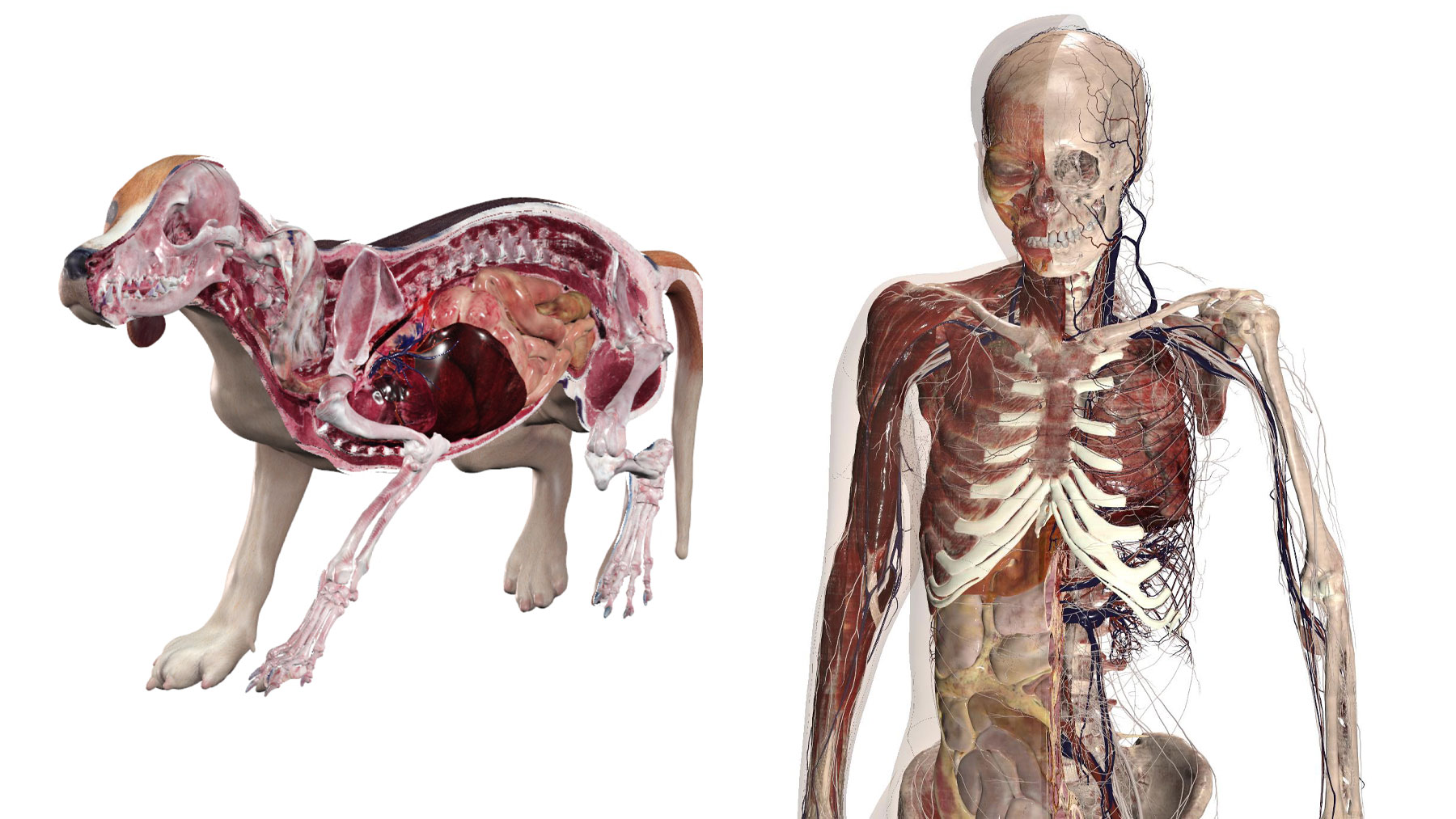
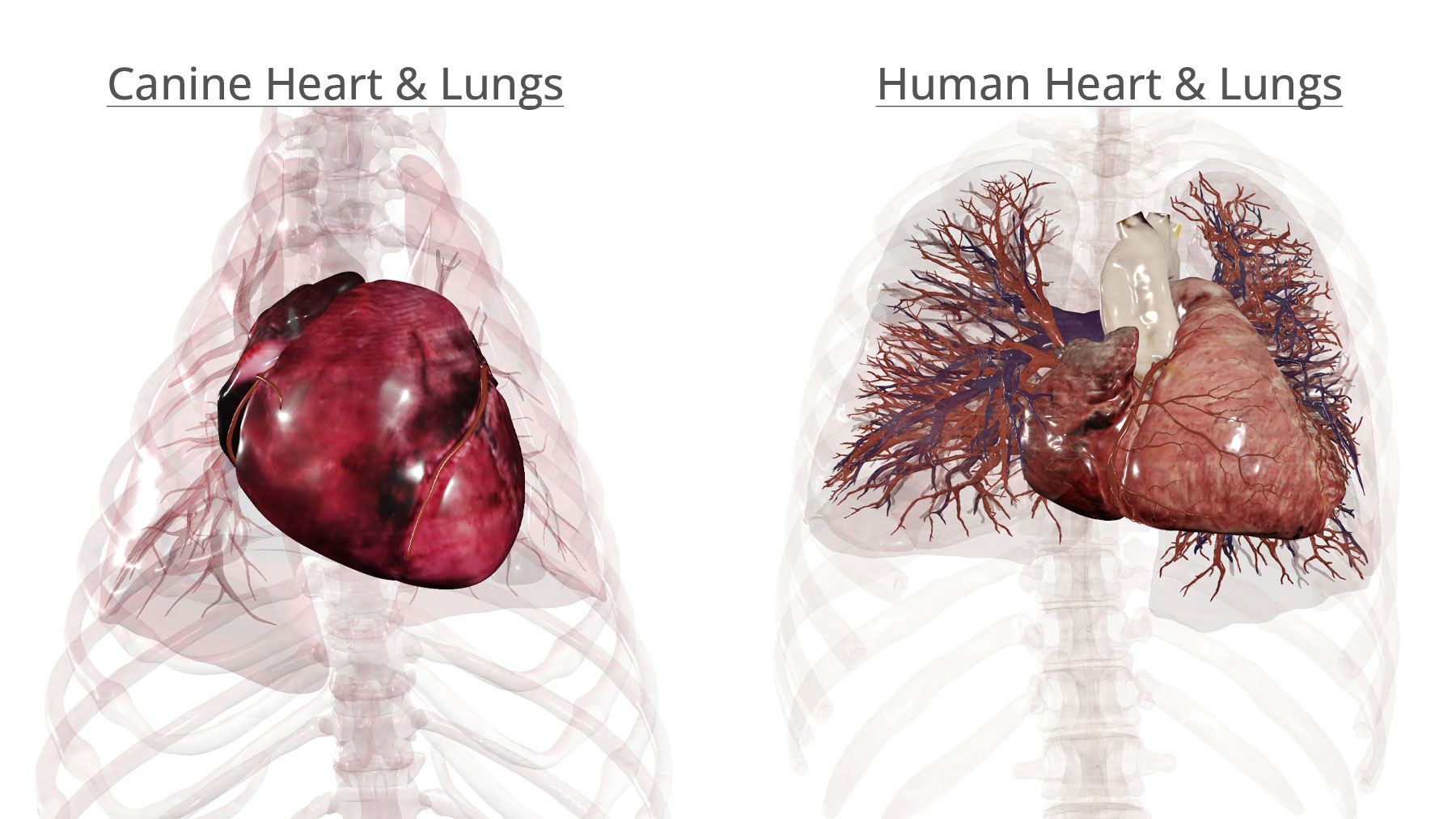
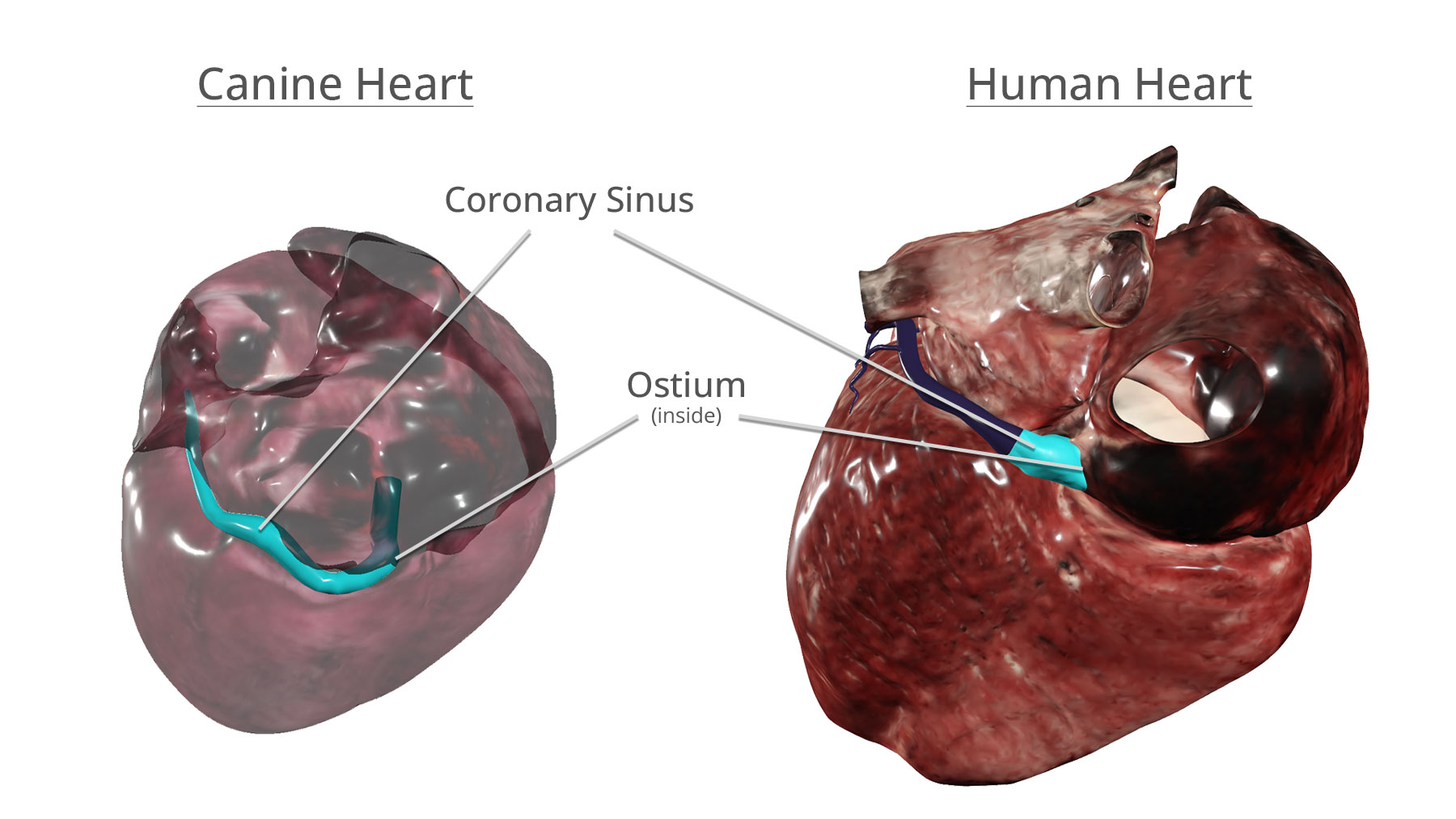
According to a comparative anatomy analysis published by the University of Minnesota, there are several subtle differences between canine and human cardiovascular anatomy. One of the most visible anatomical distinctions is how the canine vena cava are situated compared to a human’s; they enter the heart perpendicular to one another, while the human superior vena cava and inferior vena cava are in line with each other. The location of fossa ovalis in dogs is also different. It’s located more caudally than it is in the human heart. In addition, the coronary sinus ostium of the human heart is partly shielded by the Thebesian valve – a trait that doesn’t apply to the canine heart.
Also, the number of pulmonary veins differs in a canine heart compared to the human one. Specifically, a human heart has four or five pulmonary veins, while a dog heart can have four to eight pulmonary veins that return blood to the left atrium.